Menu

  • Home
  • About
  • Search
  • Featured Shows
Spokely

© 2026 Spokely

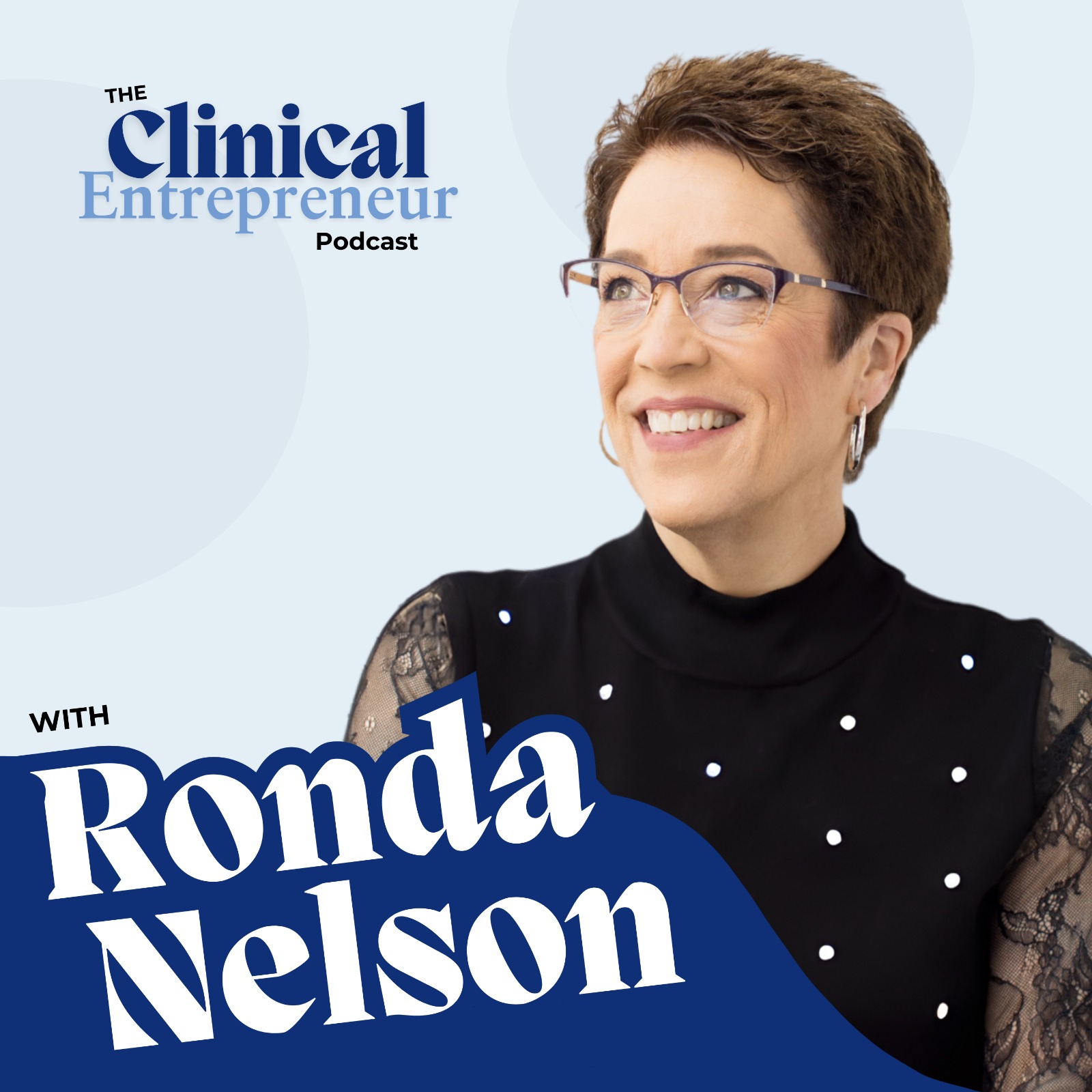
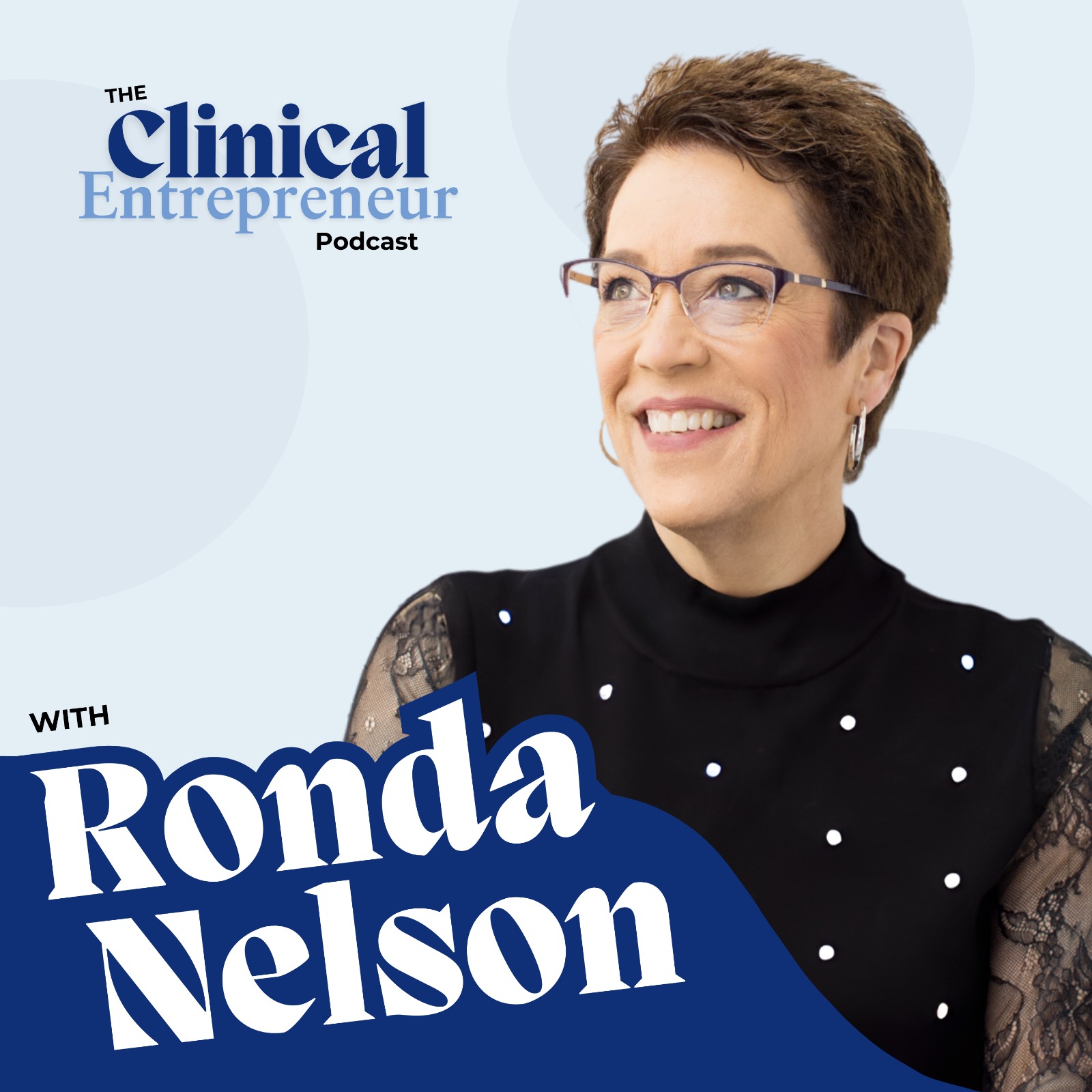
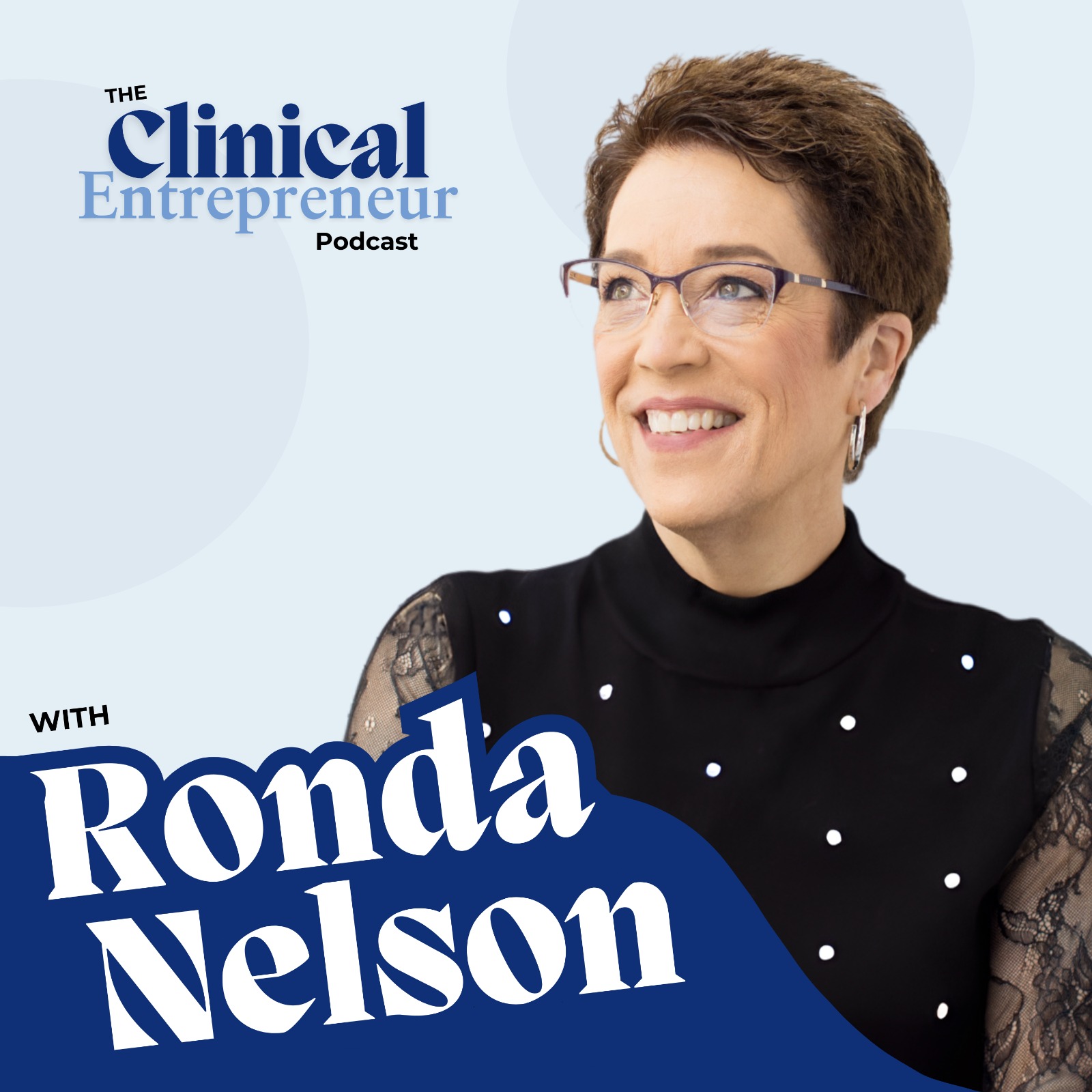
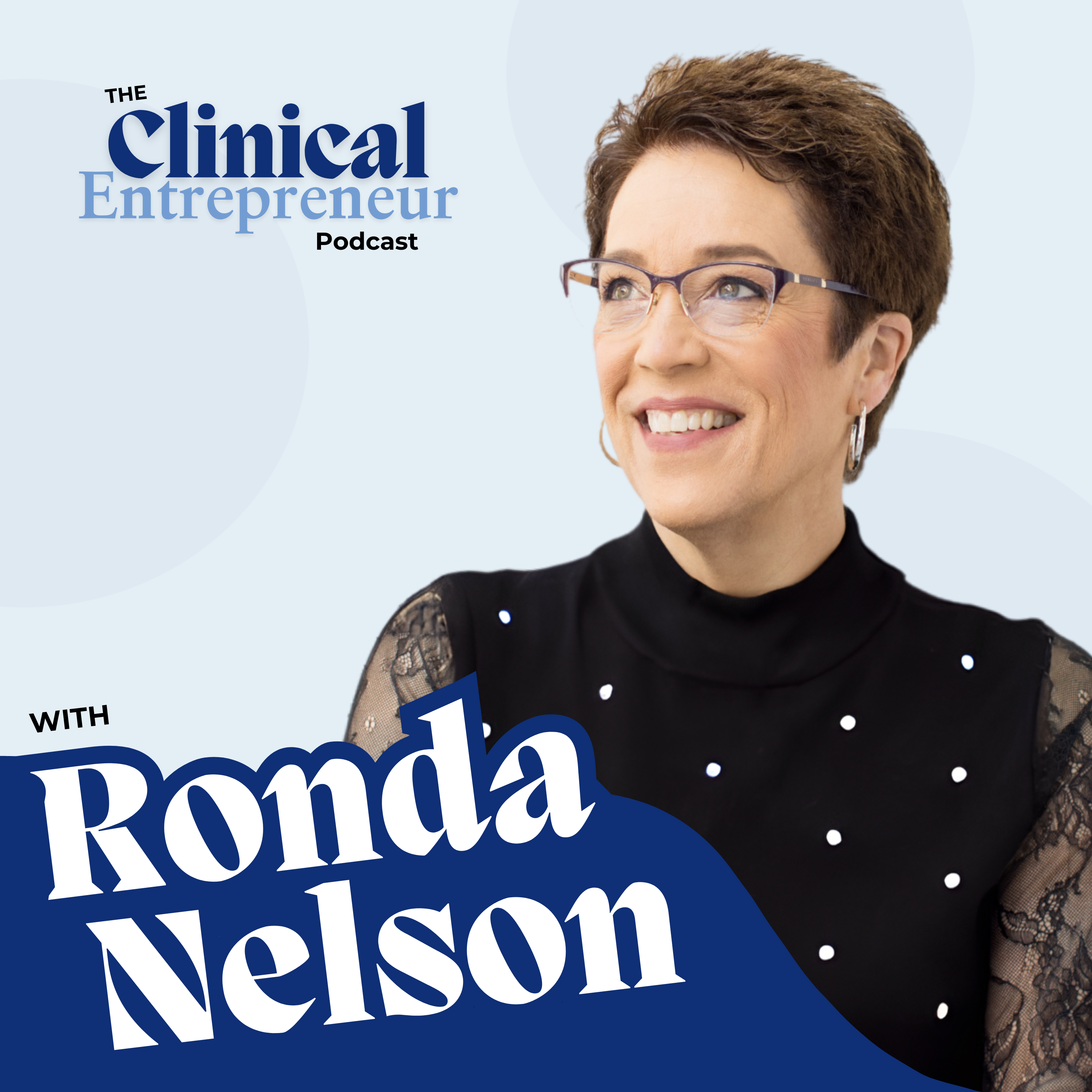
The Clinical Entrepreneur

The Clinical Entrepreneur

Ronda Nelson

BusinessHealth & Fitness

Welcome to Season 2 of The Clinical Entrepreneur podcast - where we ditch the boring business talk and serve up the real, raw, and ridiculously helpful strategies you need to grow your wellness practice. This season is all about big moves, bold goals, and finally building the business that matches your vision. From creating programs your patients will rave about to streamlining your systems so you can actually breathe (imagine that!), we're covering it all - minus the fluff. If you're ready to attract your dream patients, grow your income without burnout, and finally feel like the confident CEO of your practice, you're in the right place. Think of me as your sassy, no-BS business bestie, here to cheer you on every step of the way. Let's build the practice - and the life - you've been dreaming about. Grab your coffee (or wine), and let's do this!

Episodes

297: How to Raise Your Prices Without Losing Patients

297: How to Raise Your Prices Without Losing Patients

I've heard every excuse about why wellness practitioners don't raise their rates. Things like "my patients can't afford it," or "I don't know enough to charge more," or even "what if they leave?" The underlying fear that keeps your prices low isn't about the money. It's about what you believe you actually deserve. I recently raised my fees – by only $20. And I laughed at myself - because I know I'm worth more than that. But that small number told me something important: even I get comfortable with what I'm charging. And comfortable is where practices quietly plateau. In this episode I'm getting real about the actual fears that keep practitioners from raising their rates every so often. The belief that your patients can't afford more is simply not true. The idea that you need to know more before you deserve more isn't true either. People pay for what's important to them. Period. I'll also share the exact language to use with your patients when your prices go up – you'll be able to communicate the change with confidence, no justification or over-explaining. You'll be surprised at how many people won't even bat an eye. Because the value the work you do.
16min•Mar 17, 2026
296: Why I Rarely Order Lab Tests (And What I Do Instead)

296: Why I Rarely Order Lab Tests (And What I Do Instead)

I'm just going to say it: you probably don't need as many lab tests as you think. After 23 years in practice, I'm sharing why over-testing is getting in the way of good clinical work - and the only three reasons I'll actually order a test. I see it constantly: a new patient walks in with a stack of results - stool tests, genetic tests, mold panels, toxin panels, sometimes $3,000 or $4,000 worth - and they're still sick. If the tests had the answer, they wouldn't be sitting across from me. Here's what I've learned: tests don't give you a diagnosis. They give you data. And data without a thorough clinical history is just expensive noise. The most valuable diagnostic tool you have isn't a lab panel - it's your brain, your questions, and your ability to keep pulling the thread. In this episode I'm breaking down the only three circumstances where I'll order a test, the clinical history questions most of us never think to ask, and a real case where one almost-missed question changed everything about how I treated that patient. If you want more of this kind of clinical thinking - how to think through a case, ask the right questions, and trust what you already know, Clinical Academy is where we dig into all of it together. Resources and Links: Clinical Academy Practice Better - patient intake and practice management software Professional Co-op Services - lab panels mentioned
20min•Mar 10, 2026
295: The Real Reason Your Patients Keep Disappearing

295: The Real Reason Your Patients Keep Disappearing

If your schedule has more holes in it than you'd like, it's probably not a marketing problem - it's a practice model problem. I'm breaking down the 5 elements of an entry-level, outcome-based program so your patients stop disappearing and you actually get paid for the transformation you deliver. If every patient you'd seen in the last six months was still active in your practice right now, would your schedule still be partially empty? Probably not. You have the patients - the problem is keeping them active and engaged. With a typical fee-for-service model, every appointment feels like a ka-ching, ka-ching, ka-ching - and some people simply can't sustain the expense. So they silently drop off. But there's a better way. Single transactions (e.g. chiro adjustment + a few more supplements) feel like an expense. But when you can offer them a transformation of their health - which is based on the outcome they want - it feels like an investment. In this episode, I walk you through the five components needed for a transformational offer - from naming the specific problem to finding the right price based on the value of the outcome. This is a sneak peek into what we do inside Clinical Business Academy - every single day. To find out where you might be stuck in your own practice, download the free Practice Vitals checklist to find out exactly what to focus on first: Practice Vitals Checklist. Ready to build a business model that actually works?
27min•Mar 3, 2026
294: Why Your Protocol Isn't Working (Start With These 3 Things First)

294: Why Your Protocol Isn't Working (Start With These 3 Things First)

If your patient is doing everything right and still not moving the needle, stop changing the protocol. Start here instead. I'm breaking down 3 of my 5 Clinical Non-Negotiables: the foundational things I address with every single patient before anything else, no matter what they came in for. Here's the unconventional truth: more/better/different protocols aren't the answer. Doing them in the right order is. I've made this mistake - and watched other practitioners make it as well - for over 20 years. A patient comes in with Hashimoto's so you reach for a typical thyroid protocol. A little iodine, some selenium, and maybe Thytrophin PMG. And it doesn't move the needle one bit. That's because you skipped over the most important part of any clinical presentation. In this episode, I walk through three of my five Clinical Non-Negotiables - the foundational systems I assess with every single patient before going after their primary presenting complaint. Learn why upper digestion is absolutely central to everything else. Understand the essential role of bile, and why you cannot out-supplement a nervous system that's stuck in fight-or-flight. You can find all five of my Clinical Non-Negotiables right here. And if you want to learn more about using bitters, specific dosing on bile, adrenal testing, and so much more - you can find it in Clinical Academy. 👉 Go to Clinical Academy to get started.
25min•Feb 24, 2026
293: From Expensive Hobby to a Profitable Practice: 5 Leaks You Need to Fix Now

293: From Expensive Hobby to a Profitable Practice: 5 Leaks You Need to Fix Now

Great clinician, anemic bank account? Let's identify the real reason you're stuck: you are pricing like a hobbyist. In this episode, I'll show you how offers, boundaries, overhead math, and a clear niche help you finally pay yourself without burning out or working 60-hour weeks. Inside this episode, I walk you through the five "financial anemia" culprits I see over and over in clinical practices, and the mindset shift that changes everything: people don't pay for functional medicine… they pay for outcomes. We'll talk about building a real offer (not just fee-for-service), reverse-engineering the monthly "nut" you have to crack, plugging time leaks with clean boundaries, and why becoming a specialist makes you a necessity (not a commodity). If you've ever thought, "I just can't charge that," this one's for you. Ready to address your biggest leak first? And if you want my eyes on your numbers and your offer, book a Practice Strategy Call!
30min•Feb 17, 2026
E292: What These 5 Cases Taught Me About Being a Better Clinician

E292: What These 5 Cases Taught Me About Being a Better Clinician

Five very different cases, one big lesson: the "obvious" answer is often the wrong one. In this final episode of my 6-part clinical thinking series, I'm giving you real-life updates on five challenging cases - and the six principles these cases reinforced in my own practice. You'll hear what changed (and what didn't) with everything from a cracked tooth infection and H. pylori progress, to panic attacks with sky-high anxiety, to a stubborn restless leg case that's testing everyone's patience. And then we zoom out, because this is where the real clinical growth happens: how to get the story, how to listen without letting the patient drive the theory, and why treating the system (not just the symptom) is the hill I will die on. If you want more "boots-on-the-ground" clinical how-to-protocols, strategy, implementation, and what to do when the case gets messy - come join Clinical Academy. And if your practice feels a little… rickety (been there), Clinical Business Academy can help. Grab the free " Six Principles of Clinical Thinking " resource.
22min•Feb 10, 2026
E291: When the Gut Isn't the Real Problem

E291: When the Gut Isn't the Real Problem

A former competitive athlete came to me barely able to function. He had severe nausea, almost constant stomach pain, a known ulcer, crushing anxiety, and unrelenting fatigue. After looking at his intake forms, it seemed obvious that his digestive system was screaming for help so I did what any practitioner would do - I started by supporting optimal upper digestion. And everything made him worse. Bitters? Made him worse. Gallbladder support? Worse. Aloe? Also worse. The PPI worked, then didn't. The DGL helped a little, then stopped. I kept adjusting the protocol, thinking I just needed the right combination. But every change triggered more panic. Every new supplement amplified his symptoms. Then I had a huge realization: his digestive system t wasn't the problem. It was just the microphone, amplifying the symptoms. His nervous system was so completely dysregulated that it couldn't regulate around anything - not food, not supplements, not even safety. And I didn't see it until he was gone. This is the hardest case I've shared in this series - not because the symptoms were complex, but because I had tunnel vision. I was so focused on fixing his upper digestion and gut that I missed the real driver: a nervous system that had completely gone off the rails and could no longer regulate. What You'll Learn: The signs of complete nervous system dysregulation (and why they can be hard to spot) Why the loudest symptom isn't always what needs addressing first How asking patients to track symptoms can backfire badly The difference between stabilizing a patient and trying to fix them (spoiler: some people need 'boring' before they need a protocol) Why post-viral neuroimmune injury is a whole different beast What "creating safety" actually means clinically - and why it's medicine Resources Mentioned: Free download: 6 Principles of Clinical Thinking Learn the "how" of functional medicine inside Clinical Academy Connect with Ronda: Clinical Academy: rondanelson.com/clinicalacademy Free Resource: rondanelson.com/6principles
32min•Feb 3, 2026
E290: The H. Pylori Case That Stumped Everyone (Until We Fixed the One Thing They All Missed)

E290: The H. Pylori Case That Stumped Everyone (Until We Fixed the One Thing They All Missed)

What causes relentless belching that can clear a room - even after four rounds of H. pylori treatment? A 55-year-old retired dental hygienist had been treated for H. pylori four times. Two rounds of medical intervention and two different functional medicine practitioners tried to help - without success. The infection kept coming back, along with the belching so severe she could clear a room. The problem? Everyone missed the most important thing: the biofilm. In this episode, Ronda walks you through the exact three-phase protocol that finally worked: Prep & Prime (biofilm disruption + gentle antimicrobials), Target & Eliminate (targeted killing agents), and Gut Remodeling (barrier repair). You'll learn why starting aggressively often backfires, how to track progress using frequency/duration/intensity, and the unexpected supplement reaction that triggered severe anxiety. This case is a masterclass in clinical thinking; knowing when to slow down, when to reassess, and why treating the same infection the same way will always give you the same result. What You'll Learn: Why biofilms protect pathogens from antibiotics and antimicrobials - and how to disrupt them The 4-supplement Prep & Prime protocol Ronda used for 2 weeks before using antimicrobials How to balance aggressive treatment with patient tolerance (and when to pull back) Why one supplement caused dark, ruminating thoughts - and how we figured it out The difference between managing presenting symptoms and addressing root cause Resources Mentioned: Free download: 6 Principles of Clinical Thinking at rondanelson.com/6principles Learn the "how" of functional medicine inside Clinical Academy at rondanelson.com/clinicalacademy Connect with Ronda: Clinical Academy: rondanelson.com/clinicalacademy Free Resource: rondanelson.com/6principles
36min•Jan 27, 2026
E289: The Restless Leg Case I Missed Twice - Clinical Thinking Episode 3

E289: The Restless Leg Case I Missed Twice - Clinical Thinking Episode 3

Twenty years of restless legs. Two failed attempts. One patient who kept coming back anyway. In this episode, I finally figured out what was missing - and it had nothing to do with magnesium, valerian, or sleep hygiene before bed. This case humbled me. I'd treated her twice before with all the "right" things - minerals, adaptogens, calming herbs, etc., and nothing worked. When she came back a third time, desperate and hardly sleeping, I knew I had to dig deeper. What I found changed how I think about restless leg syndrome entirely. RLS isn't a muscle problem. It's not a simple mineral deficiency. It's a nervous system excitability disorder driven by overlapping dysfunctions: dopamine signaling, brain iron metabolism, inflammation, and liver function. I discovered the smoking gun was a protein called hepcidin which controls iron trafficking in the body. When inflammation is high and the liver is congested, iron gets trapped. The brain starves. Dopamine drops. And the legs can't stop moving. In this episode, I walk you through the research that opened my eyes, the labs that finally made sense, and the Phase One protocol I built from scratch. After just two weeks, she's already seeing improvement - not because I treated her legs, but because I treated the right things in the right order. If you've ever had a case that forced you to start over, this one's for you.
47min•Jan 20, 2026
E288: Why Her Panic Attacks Had Nothing to Do With Her Brain – Clinical Thinking #2

E288: Why Her Panic Attacks Had Nothing to Do With Her Brain – Clinical Thinking #2

She was convinced it was her thyroid. After years of panic attacks, chronic anxiety, and a body that felt like it was "fighting something," she came to Ronda certain the answer was in her thyroid labs. It wasn't. In this Clinical Thinking case study, Ronda traces the real root cause back to compromised digestion and a nervous system running on stress hormones. This 28-year-old executive assistant had all the classic signs practitioners often miss: fasting glucose of 71 (a red flag for metabolic instability), light-colored stools, fatty food intolerance, and that telltale mid-back pain at the bra line. She'd been on Armour thyroid since age 13. She'd survived food poisoning in Costa Rica. And every single panic attack? Happened on a day she'd eaten chocolate. Ronda walks through how she connected the dots, why she started with upper digestion instead of adaptogens, how low glucose and low A1C reveal a system propped up by cortisol and adrenaline, and why the "obvious" first answer is almost never the right one. You'll also hear a practical tip for managing anxious patients: using AI to create organized visit recaps that satisfy their need for structure and reduce the between-appointment panic spirals. If you want to develop this kind of clinical thinking in your own practice, download Ronda's free guide: The 6 Principles of Clinical Thinking
38min•Jan 13, 2026
E287: Critical Thinking Episode 1: The Cracked Tooth That Explained Everything

E287: Critical Thinking Episode 1: The Cracked Tooth That Explained Everything

She looked perfect on paper. Impeccable diet. Physically fit. Emotionally stable. Then she walked into my office and said, "I can't stop crying. I can't think. Something is wrong, and I don't know what it is." Her labs told part of the story: CRP at 87, neutrophils through the roof, lymphocytes bottomed out. But there was no fever. No illness. No obvious source. Until she dropped one sentence that changed everything. This is the first episode of my new Clinical Thinking series where I walk you through real patient cases, step by step, so you can see how I actually think through complex presentations. In this episode, you'll learn why the obvious answer is rarely the right one, how the 30/30/30 rule can keep you from tunnel vision, and what a cracked tooth taught me about dental history and emotional symptoms. I also share the exact protocol I used, and why I intentionally kept it simple instead of ordering more tests. If you want the framework behind how I approach every case, download The 6 Principles of Clinical Thinking. And if you're ready to develop this kind of thinking, not just follow protocols, join me inside Clinical Academy.
21min•Jan 6, 2026
E286: I'm a Dopamine Addict (And It Almost Wrecked My Business): 5 Lessons from My Hardest Year

E286: I'm a Dopamine Addict (And It Almost Wrecked My Business): 5 Lessons from My Hardest Year

I'm going to be honest with you: 2025 humbled me. It wasn't my year. I didn't hit the goals I set. I didn't finish the projects I planned. I spent more time putting out fires than building anything meaningful. I went from a team of five down to two plus a virtual assistant and I ended up picking up way more work than a business owner should be doing. I was so scattered, so mentally fatigued, that some days I couldn't focus on anything for more than 10 minutes. There's a joke in my world: 'How many rabbit holes can Ronda go down in one day?' And this year, the answer was... too many. So this episode isn't a victory lap. It's not 'here's how I crushed it in 2025. It's the truth. Here are the five lessons this year taught me the hard way. And if you're ending the year feeling exhausted, overwhelmed, or like you just barely survived... I see you. You're not alone. Let's close out 2025 together. Resources Mentioned: • Clinical Academy — Join our community of practitioners mastering clinical skills and building thriving practices • Clinical Business Academy — Ready to build systems that work? Apply here. • Coming in January: The Clinical Thinking Series — Don't miss it!
25min•Dec 30, 2025
E285: Why "Quick Questions" Are Costing You More Than You Think

E285: Why "Quick Questions" Are Costing You More Than You Think

Those "quick questions" your patients sneak into chats, emails, and hallway drive-bys are quietly draining your time, profit, and clinical excellence. In this episode, I'm pulling back the curtain on boundary creep; what it looks like, why it happens, and the exact phrases you can use to redirect those questions into paid appointments so you can protect your schedule, your sanity, and your bottom line. So if you've ever given out your cell number, answered a Practice Better chat at night, or tried to handle a full clinical case in your DMs, friend… this one is for you. I'm walking you through how over-access erodes your authority, leads to inferior clinical decisions, and leaves you resentful and exhausted. You'll hear real stories from my own practice (yes, including the one where I missed a key clinical clue in chat), plus clear, copy-and-paste language you can use by email, phone, in-office, and even at church or the grocery store. Listen in and then choose one boundary to tighten up this week - and if you want more practical support like this, be sure to join my email list so you never miss what's coming next. Ready for more support? Join Ronda's email list and get weekly insights, trainings, and business-building tips you can put into practice right away: rondanelson.com/join
22min•Dec 23, 2025
E284: Big Pharma's Newest Lie: 'Perimenopause' for Women in Their 30s

E284: Big Pharma's Newest Lie: 'Perimenopause' for Women in Their 30s

Big pharma has officially crossed the line: 30-something women are being told they're in 'perimenopause,' and the recommendation (of course) is to start HRT. The truth is that they are tired, stressed, skipping meals, and feeling overwhelmed. In this ultra-sassy episode, Ronda breaks down the manufactured narrative driving this trend, the physiology that proves it wrong, and a real case from her clinic that highlights how widespread the misinformation has become. Younger women don't need hormone therapy - they need blood sugar support, a well-regulated nervous system, and a meal that isn't toddler leftovers. Want more clinical clarity like this? You need to be inside Clinical Academy where you get patient-ready protocols, a library of fully searchable trainings, and real-world resources that save time and make your patient care so much easier. 👉 To join Clinical Academy, go to rondanelson.com/clinicalacademy
26min•Dec 16, 2025
283: A Case Study in Clinical Simplicity - Don't Skip the Low-Hanging Fruit

283: A Case Study in Clinical Simplicity - Don't Skip the Low-Hanging Fruit

In this episode of The Clinical Entrepreneur, I walk you through a real case study of a high-stress, high-anxiety patient who turned things around - no labs, no overwhelm, and no complicated protocol. Instead, I focused on what I call "the low-hanging fruit": stress, sleep, digestion, and diet. You'll hear the exact questions I asked, the protocols I recommended, and the surprising symptom he revealed weeks later. Want help building clinical confidence like this? 🎧 Listen to more episodes 💬 Let's connect on Instagram 🤲Join my Facebook community
29min•Dec 9, 2025
S2 E48: 2026 Won't Plan Itself - But This Episode Will Help

S2 E48: 2026 Won't Plan Itself - But This Episode Will Help

As the year wraps up, it's time to do more than just "plan for the next." This episode is a clear walk-through to help you celebrate the wins, identify the lessons, and set your business up for a powerful new year. Inside this episode: ✅ How to reflect on what worked (and what didn't) ✅ Where most practitioners get stuck when planning the next year ✅ The 4-step framework I use to refocus with intention ✅ Two free downloads to help you map out what's next 🔗 Grab the free month 12 resources: The Year-End Reflection Workbook and Next-Year Vision Planner 🎧 Get accountability and support for your business by joining Clinical Business Academy - Click here to schedule a call 📲 Let's build the practice and life you've always wanted… together.
33min•Dec 2, 2025
S2 E47: Are You Hiding in Your Practice? What It Really Means to Go All In

S2 E47: Are You Hiding in Your Practice? What It Really Means to Go All In

If you've ever second-guessed your value, avoided raising your rates, or let a patient dictate their own care plan - this episode is for you. We're diving deep into the silent ways wellness practitioners play small - often without even realizing it. From discounting your services to avoiding visibility, these subtle habits can keep you stuck in a practice that feels more draining than fulfilling. In this honest, heart-led episode, Dr. Ronda Nelson shares: The 5 invisible ways practitioners hide in plain sight Why working harder isn't the answer How to break out of your comfort zone and become a respected leader A loving challenge to help you stop shrinking and start growing You didn't start your practice to stay small. It's time for you to take up more space in the world - and do so unapologetically and with confidence. 👇 RESOURCES + LINKS 🎯 Clinical Business Academy 🎙 Listen to all podcast episodes 💛 Subscribe for weekly videos on practice growth, mindset, and marketing for wellness practitioners.
35min•Nov 25, 2025
S2 E46: The Hard Truth About Growing a Practice (No One Talks About)

S2 E46: The Hard Truth About Growing a Practice (No One Talks About)

Ready for some real talk about what it takes to grow a thriving wellness practice? In this episode, Ronda Nelson shares the truth no one's saying out loud: strategy isn't enough. We'll talk about mindset, fear, ownership, and how to finally get unstuck without working harder or chasing one more "perfect" plan.
27min•Nov 18, 2025
S2 E45: 5 Ways to Reactivate Old Patients (Without Needing Any Fancy Tech)

S2 E45: 5 Ways to Reactivate Old Patients (Without Needing Any Fancy Tech)

Got a list of past patients collecting digital dust? 😬 You're not alone, and reactivating them might be the fastest way to fill your schedule. In this episode, I'm breaking down five simple, low-tech strategies to reconnect with old patients, without feeling awkward, salesy, or desperate. Because sometimes, the easiest growth isn't in new leads… It's in the ones who already know and love you. 💛 ✨ Here's what you'll learn: ✅ Why reactivation is the lowest-hanging fruit in your business ✅ 5 proven ways to reconnect (no funnels or software needed) ✅ The exact scripts to make outreach feel natural ✅ How to offer "welcome back" bonuses that feel generous, not gimmicky ✅ A mindset shift that makes reactivation feel like service, not selling If you've been focused on chasing new leads while your old ones fade away, this episode will help you turn forgotten patients into repeat clients (and reliable revenue).
15min•Nov 11, 2025
S2 E44: How to Plan Next Year's Practice Growth (Without Just Winging It)

S2 E44: How to Plan Next Year's Practice Growth (Without Just Winging It)

Be honest, is your plan for next year basically "get more patients"? 🙋‍♀️ If so, we need to talk. Because hope isn't a strategy… and winging it won't grow your practice. In this episode, I'm showing you how to create a simple, strategic practice growth plan that actually works, one that's grounded in data, clarity, and focus (not endless to-dos or wishful thinking). ✨ Here's what you'll learn: ✅ The 4 practice metrics every clinician should track before planning anything ✅ How to evaluate what's working (and ditch what's not) ✅ Why decluttering your offers and systems matters more than adding new ones ✅ How to build a quarterly growth plan that keeps you on track all year ✅ The mindset shift that makes planning feel exciting, not overwhelming If you've been "busy" but not growing, this episode will help you reset, refocus, and plan for real success in 2026.
27min•Nov 4, 2025
1 / 6