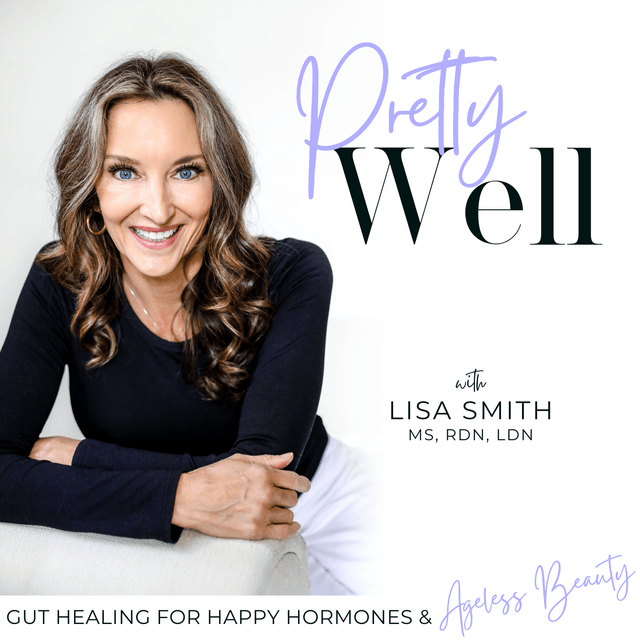
PRETTY WELL - Anti-Aging, Beauty, Balanced Hormones, Inflammation, Gut Health, IBS, Evidence-based
Miracle Cure or Internet Hype? The Truth About Castor Oil
Episode 202•27min•Feb 25, 2026
0:0027:44
#200 - Miracle Cure or Internet Hype? The Truth About Castor Oil Castor oil is having a moment. Scroll social media for five minutes and you’ll see it: “Cured my endometriosis.” “Detoxed my liver.” “Regrew my hairline.” “Healed… well, everything.” And when something is suddenly the solution to literally every problem… it’s time to pause. Because while castor oil is absolutely powerful, not every claim floating around the internet deserves your blind trust (or all of your body parts). In this episode, I break down what castor oil actually is, what it’s scientifically supported for, what I personally use it for, and what I absolutely would not recommend—especially if you’re pregnant or thinking about putting it near your eyeballs. If you’ve been curious about castor oil packs, anti-aging benefits, hair growth hacks, stretch mark reduction, or lymphatic detox claims… this episode is your grounded, evidence-based (with a dash of anecdotal honesty) guide. What You’ll Learn in This Episode What castor oil is made of (and why omega-9 fatty acids matter) FDA-approved uses vs. influencer folklore Whether castor oil actually helps with constipation Skin barrier repair, anti-aging, and collagen support Hair growth, scalp health, and rosemary oil synergy Castor oil for scars, stretch marks, arthritis, and cracked heels The truth about castor oil packs for liver detox Regular vs. Jamaican black castor oil—is there a difference? Side effects, safety, and when to absolutely avoid it Timestamps 00:00 – Castor oil: miracle cure or marketing frenzy? 01:00 – Why the FDA cracked down on exaggerated claims 02:00 – What castor oil actually is (hello, omega-9 fatty acids) 04:30 – What it’s officially approved for 05:00 – Would I drink it for constipation? 06:30 – Traditional uses: skin conditions, infections, inflammation, lymphatic support 07:30 – Skin benefits that actually make sense 08:00 – Fine lines, wrinkles, and collagen support (why it may help) 09:00 – How to use it for hair growth 10:30 – Acne: helpful or hormonal disaster? (Bio-individuality matters) 12:00 – Castor oil packs for liver detox—worth it? 13:00 – Thyroid application (yes, I use it for Hashimoto’s support) 14:00 – Stretch marks & scars: how to use heat to enhance absorption 16:00 – Anti-aging layering method (this is worth the price of admission) 17:00 – Lips: hyaluronic acid + castor oil combo 18:00 – Cracked heels, cuticles, and nail growth 20:00 – The fern experiment (because why not?) 21:00 – Jamaican black castor oil vs. regular: which is better? 22:00 – Side effects and when not to use it 23:00 – Pregnancy warning (seriously, a hard no) 24:00 – My honest verdict Let’s Talk About What’s Real Castor oil is rich in ricinoleic acid—an omega-9 fatty acid with anti-inflammatory properties. That’s the magic. It’s thick. It’s deeply emollient. It seals moisture in like a champ. Which makes it excellent for: Dry skin Eczema-prone areas Crepey skin in perimenopause and menopause Fine lines (temporarily plumping through hydration) Cracked heels Dry cuticles Scalp nourishment And when you layer it correctly, it acts like a sealant to hold hydration in. I personally use it nightly on my face, neck, thyroid area, lips, and brows. Am I shiny before bed? Yes. Do I care? Not even a little. What I’d Be Careful With Internal use for constipation (very effective but not my first-line recommendation) Anything near your eyes (I woke up with red, burning, and irritated eyes) Vaginal dryness or sensitive internal use (research first, please) When To Never Use It Pregnancy (it induces labor) Castor Oil & Hormones As estrogen drops in perimenopause and menopause, skin becomes thinner, drier, and less elastic. This is where castor oil shines—literally and figuratively. It supports: Skin barrier repair Moisture retention Elasticity appearance That “spring back” we start to lose Is it Botox? No. Is it still amazing and affordable? Absolutely. Bottom Line Is castor oil a cure-all? Nope. Is it a potent, multi-use, low-risk tool? Yes. In a world where we’re constantly sold $200 serums and complicated 12-step regimens, there’s something refreshing about a humble glass bottle that’s been used for centuries. If you try it: Buy organic Make sure it’s in a dark glass bottle Patch test first Use cotton (preferably organic), not polyester, when covering treated areas And maybe—just maybe—pour it into something beautiful so you’ll actually remember to use it. One More Thing Pretty Well was shared more than 94% of other shows in Spotify Wrapped this year. That’s because of you. You share it. You text it. You send it to friends who need better information without the hype. And that means everything to me. If this episode helped you to decode the castor oil craze (or prevented you from putting it in your eyes), do me a favor and share it with a friend. 🔗 Resources & Links (As An Amazon Associate I Earn A Small Commission From Qualifying Purchases At No Extra Cost To You): This is the Castor Oil I Use: https://amzn.to/4anhFMD Love these organic cotton castor oil wraps: https://amzn.to/4rOdGP0 More castor oil goodies: https://amzn.to/4qHxAu8 Beautiful glass decanter (small): https://amzn.to/4b0eCcr ✨Join the conversation: Share your thoughts with us on social media or in the comments! 🎙 Subscribe, Share & Review: If you loved this episode, please take a moment to subscribe and leave a review on Apple Podcasts! Your support helps us reach more people who need these insights. Thanks for tuning in to Pretty Well! See you next week! Contact Lisa: Website: www.lisasmithwellness.com IG: https://www.instagram.com/prettywell_podcast/ Disclaimer: Nothing in this podcast is to be taken as medical advice, please take informed accountability and speak to your provider before making changes to your health routine. The primary purpose of The Pretty Well Podcast being to educate. This content is for informational and educational purposes only. It is not intended to provide medical advice nor to take the place of such advice or treatment from a personal physician. By listening to this content, you agree to consult your own physician or qualified health professional regarding specific health questions. Neither Lisa Smith, The Pretty Well Podcast, nor any guest takes responsibility for possible health consequences of any person or persons following the information in this educational content. All listeners of this content, especially those who are pregnant or taking prescription or over-the-counter medications, should consult their physicians before beginning any nutrition, supplement, or lifestyle program. The Pretty Well Podcast is for private non-commercial use and our guests do not necessarily reflect any agency, organization, or company that they work for. In addition, opinions of interview guests do not necessarily reflect the opinions of Lisa Smith and/or The Pretty Well Podcast. This content is not guaranteed to be correct, complete, or up to date.