Menu

  • Home
  • About
  • Search
  • Featured Shows
Spokely

© 2026 Spokely

Cybersecurity Today

Cybersecurity Today

Jim Love

NewsTechnology

Updates on the latest cybersecurity threats to businesses, data breach disclosures, and how you can secure your firm in an increasingly risky time.

Episodes

Another Medicat Device Firm Hit

Another Medicat Device Firm Hit

Medical Device Breaches, Anti-Scam Pledge Scrutiny, AI Font Trick, and Iran-Linked Cyber Updates. Cybersecurity Today would like to thank Meter for their support in bringing you this podcast. Meter delivers a complete networking stack, wired, wireless and cellular in one integrated solution that's built for performance and scale. You can find them at Meter.com/cst The episode covers several cybersecurity stories: Intuitive Surgical disclosed a March 12 phishing-led intrusion where stolen credentials enabled access to its internal administrative network and data theft (customer/business contacts and employee records), while clinical platforms and Da Vinci/Ion systems remained unaffected. Eleven tech and retail firms including Google, Amazon, and OpenAI pledged to share threat intel on scams, amid skepticism and Verafin figures estimating $4.4T in global financial crime in 2025 and rising AI-driven fraud. LayerX demonstrated a font/CSS "glyph substitution" technique that shows humans a malicious command while AI assistants read benign text; Microsoft addressed it, while others deemed it out of scope. In Iran-war updates, senior Iranian cyber figures were reportedly killed; Iran-linked group Handala's Stryker attack allegedly wiped nearly 80,000 devices via compromised admin accounts and Intune, with further unverified leak claims. Denver crosswalk speakers were hacked due to default passwords. 00:00 Sponsor Message Meter 00:19 Medical Device Breach 01:52 Phishing Still Wins 02:32 Tech Pledge Against Scams 03:43 Fraud Numbers And AI 05:49 Font Trick AI Bypass 07:22 Vendor Responses Lessons 09:03 Iran Cyber War Updates 10:00 Stryker Intune Wipe Attack 11:07 More Iranian Claims 12:17 Denver Crosswalk Hack 13:10 Wrap Up And Signoff 13:33 Sponsor Outro Meter
14min•Mar 18, 2026
Notorious Hacker Group "The Comm,"  Operation Synergia Takedown, Stryker Cyberattack Update & More

Notorious Hacker Group "The Comm," Operation Synergia Takedown, Stryker Cyberattack Update & More

Alleged Canadian 'The Comm' Hacker Arrested, Interpol's Operation Synergia Takedown, Stryker Cyberattack Update and more.. Cybersecurity Today would like to thank Meter for their support in bringing you this podcast. Meter delivers a complete networking stack, wired, wireless and cellular in one integrated solution that's built for performance and scale. You can find them at Meter.com/cst Host David Shipley covers new details on the alleged takedown of "Waifu," a Canadian hacker tied to the cybercrime group The Com, after a harassment campaign against investigator Allison Nixon helped lead to his identification and arrest; he now faces U.S. charges including extortion and unauthorized computer access. The episode also highlights Interpol's six-month Operation Synergia, a major international crackdown that disabled 45,000 malicious IPs and led to 94 arrests across 72 countries, targeting ransomware, phishing, and malware infrastructure. An update on Stryker describes an attack on its Microsoft corporate systems allegedly involving Intune to wipe over 200,000 devices, with Stryker saying connected medical devices and services remain safe while ordering and operations are disrupted. Finally, Poland reports it stopped an attempted hack on its National Center for Nuclear Research that may have Iranian links, though officials caution indicators could be misdirection. 00:00 Sponsor Meter Intro 00:19 Headlines And Welcome 00:50 Calm Hacker Takedown 02:49 Threats Against Researcher 04:21 Unmasking And Arrest 05:46 Interpol Operation Synergy 08:10 Stryker Intune Attack Fallout 12:56 Iran Cyber War Updates 13:43 Poland Nuclear Hack Attempt 16:14 Wrap Up And Thanks 16:52 Sponsor Meter Outro
17min•Mar 16, 2026
AI Anxiety: Cybersecurity Today with Special Guest Krish Banerjee, Managing Director (Partner) & Canada Lead - Data & AI - Accenture

AI Anxiety: Cybersecurity Today with Special Guest Krish Banerjee, Managing Director (Partner) & Canada Lead - Data & AI - Accenture

Gemini in Google Workspace, Agentic AI, and Managing AI Anxiety (with Accenture's Krish Banerjee) Cybersecurity Today would like to thank Meter for their support in bringing you this podcast. Meter delivers a complete networking stack, wired, wireless and cellular in one integrated solution that's built for performance and scale. You can find them at Meter.com/cst In a special edition of Project Synapse shared with Cybersecurity Today, host Jim Love and co-host John Pinard (a VP and CSO at a Canadian financial institution) speak with Krish Banerjee, Accenture's managing director and partner leading AI in Canada. They discuss Google integrating Gemini into Workspace and how AI assistants like Gemini and Microsoft Copilot are converging, along with recent moves around agent platforms and the business models of AI, including Meta and Nvidia's evolving strategies and Nvidia's push toward enterprise agent infrastructure amid rapidly rising compute demand. The conversation explores why AI adoption lags capability, emphasizing task-based redesign, human-in-the-loop guardrails, and not "AI-washing" broken processes. They also address AI anxiety, training and culture change, impacts on education and jobs, and practical ways to use agents to stay informed and productive. 00:00 Sponsor Message 00:20 Show Intro and Guests 01:12 Gemini Comes to Workspace 03:38 AI Tool Leapfrogging 05:06 Agent Network Acquisitions 07:53 Nvidia Bets on Enterprise Agents 11:08 Why AI Adoption Lags 14:27 Agentic AI and Process Redesign 16:19 Security Guardrails and Human Oversight 24:05 Accenture Transformation and Training 26:55 AI Anxiety in the Workplace 30:22 Tasks Not Jobs 32:12 Outcome First Thinking 34:15 Personal AI Assistants 37:24 Building Agents Together 38:35 Executive Learning Curve 44:31 Kids And AI Natives 50:15 Critical Thinking And Trust 54:15 Company Advice Focus Value 55:58 Wrap Up And Sponsor
58min•Mar 14, 2026
AI Agent Hacks McKinsey Chatbot in 2 Hours

AI Agent Hacks McKinsey Chatbot in 2 Hours

AI Agent Hacks McKinsey Chatbot in 2 Hours, NPM Phantom Raven, Router Malware & Trojaned AI Models This episode covers how researchers at CodeWall used an autonomous AI security agent to gain read/write access to McKinsey's internal chatbot Lilli database in about two hours by chaining exposed APIs and an SQL injection, potentially exposing 46.5 million chats, 728,000 files, 57,000 accounts, and 95 system prompts, with McKinsey saying the issues were fixed and no unauthorized access was found. It also reports on the Phantom Raven supply-chain campaign that published 88 malicious NPM packages using a runtime-downloaded payload to steal developer system data like SSH keys and host details. A study warns that 83% of 800 million compromised passwords still meet complexity rules, highlighting credential-stuffing risk and the need for breach checks and MFA. The show notes 14,000+ routers infected with persistent malware often requiring factory resets plus hardening, and discusses Trojan backdoors embedded in AI models that trigger misbehavior under specific inputs, calling for new AI security testing and validation. Cybersecurity Today would like to thank Meter for their support in bringing you this podcast. Meter delivers a complete networking stack, wired, wireless and cellular in one integrated solution that's built for performance and scale. You can find them at Meter.com/cst 00:00 Sponsor Meter Intro 00:20 Headlines And Welcome 00:55 AI Agent Hacks McKinsey Bot 03:44 Phantom Raven NPM Malware 05:55 Strong Passwords Still Leaked 07:55 Router Malware That Persists 09:36 Trojan Backdoors In AI Models 12:01 Call For AI Backdoor Research 12:30 Sponsor Meter Outro 13:13 Sign Off
13min•Mar 13, 2026
Cyber Security Today Special Report:  Attack from Iran

Cyber Security Today Special Report: Attack from Iran

This includes our regular Wednesday/Thursday segment but with an update from this breaking story on the attack on a large US medical company.
21min•Mar 12, 2026
Fake Claude Code Installs, Arpa Phishing, Iranian and Russian Teams Mount Cyber Retaliation

Fake Claude Code Installs, Arpa Phishing, Iranian and Russian Teams Mount Cyber Retaliation

Fake Claude Code Installs, Arpa Phishing, Zombie ZIP Malware Evasion, and Iran/Israel Cyber Retaliation This episode covers four major security stories: the "InstaFix" campaign using Google sponsored ads and cloned Claude Code install pages to trick developers into pasting terminal commands that deploy the TeraStealer credential-stealing malware; a phishing technique abusing the special-use.arpa domain and IPv6 reverse DNS to evade email and domain-based defenses, using attacker-controlled DNS zones, traffic distribution systems, and lures like surveys and account notices; the "Zombie ZIP" technique that manipulates ZIP headers to bypass AV/EDR scanning, tied to CVE-2026-0866 and demonstrated to evade most VirusTotal engines; and a surge in pro-Iranian and pro-Russian hacktivist retaliation targeting Israel and regional entities with DDoS, defacements, breach claims, and disinformation, alongside Israel's humorous counter-psychological video response. Cybersecurity Today would like to thank Meter for their support in bringing you this podcast. Meter delivers a complete networking stack, wired, wireless and cellular in one integrated solution that's built for performance and scale. You can find them at Meter.com/cst 00:00 Sponsor Message Meter 00:19 Headlines And Intro 00:51 Fake Claude Install Scam 04:25 Arpa Domain Phishing 08:30 Zombie Zip Malware Trick 10:57 Cyber Retaliation Surge 13:44 Israel's PSYOP Video 14:25 Wrap Up And Sponsor
15min•Mar 11, 2026
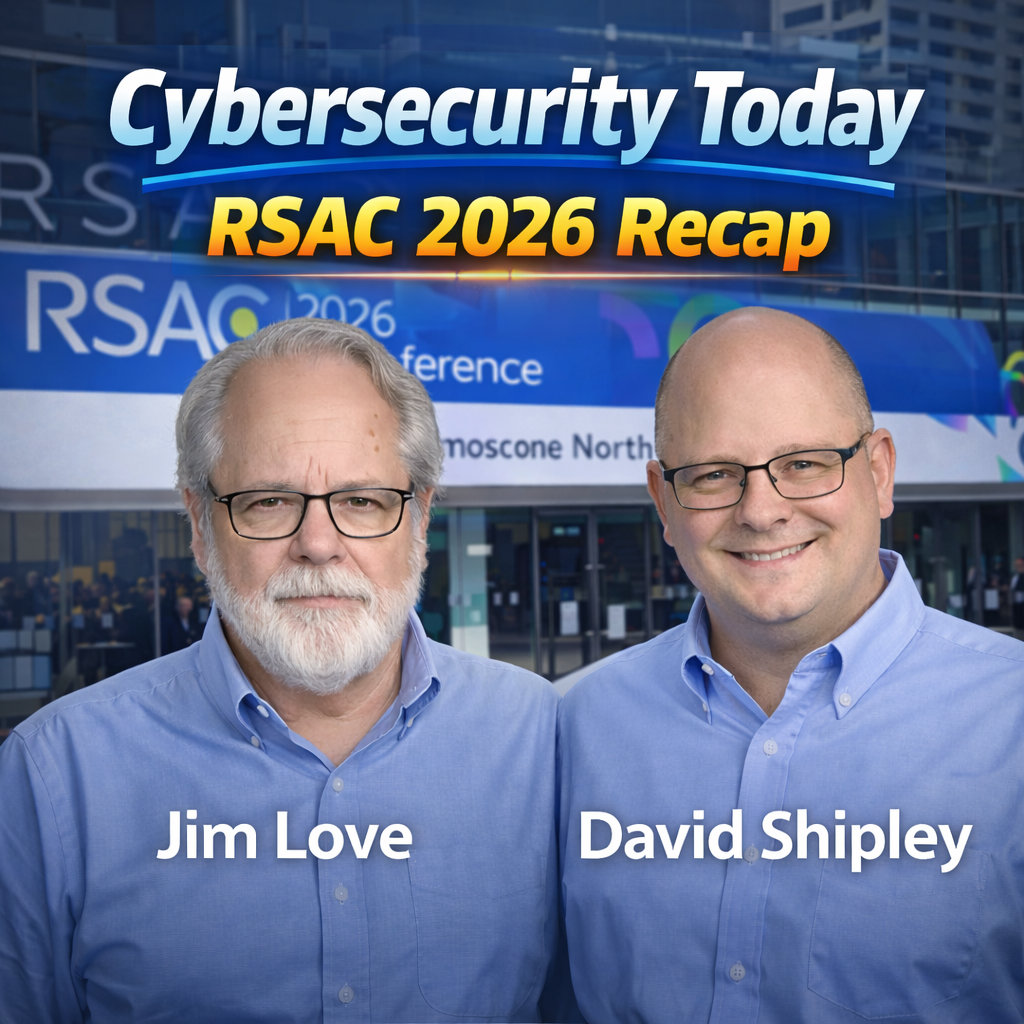
Coruna iOS Exploit Kit Goes Mass-Market: Cybersecurity Today for March 9, 2026 with David Shipley

Coruna iOS Exploit Kit Goes Mass-Market: Cybersecurity Today for March 9, 2026 with David Shipley

Coruna iOS Exploit Kit Goes Mass-Market, FBI Wiretap Platform Breach Probe, Windows Terminal ClickFix, and Iran-War Cyber Escalation This episode covers several major cybersecurity developments: Google's Threat Intelligence Group details Coruna, a sophisticated iOS exploit kit with 23 exploits and multiple chains affecting iOS 13–17.2.1, shifting from targeted surveillance use to cryptocurrency-scam distribution and a PlasmaLoader payload aimed at stealing wallet data. The FBI is investigating suspicious activity involving its Digital Collection System Network used to support wiretaps and surveillance, with concerns about third-party vendor exposure and broader federal agency targeting. Microsoft reports a new ClickFix variation that abuses Windows Terminal to deploy the Luma Stealer via encoded commands, persistence, Defender exclusions, and browser injection. The show also reviews Iran-linked cyber activity by MuddyWater and others amid regional conflict, including new backdoors and cloud-based exfiltration, and reports that Iranian drone strikes hit AWS data centers in the UAE and Bahrain, causing outages and highlighting data centers as battlefield targets. Cybersecurity Today would like to thank Meter for their support in bringing you this podcast. Meter delivers a complete networking stack, wired, wireless and cellular in one integrated solution that's built for performance and scale. You can find them at Meter.com/cst 00:00 Sponsor Message Meter 00:19 Headlines And Intro 00:50 Coruna iOS Exploit Kit 04:06 FBI Wiretap Platform Breach 06:52 ClickFix Hits Windows Terminal 10:00 Iran War Cyber Campaigns 14:59 Drones Hit AWS Data Centers 17:57 Wrap Up And Thanks 18:35 Sponsor Close Meter
19min•Mar 9, 2026
Cybersecurity Today Month in Review: World In Turmoil

Cybersecurity Today Month in Review: World In Turmoil

Cybersecurity Today Month in Review: Iran Conflict Cyber Spillover, IoT Cameras, AI Hacking Tools, and Resilience Planning In this weekend month-in-review episode, host Jim Love and panelists David Shipley, Laura Payne, Neil Bisson, and Chris "CJ" Johnson discuss cyber and infrastructure impacts tied to the US/Israel–Iran conflict, including reported compromise of traffic camera networks for targeting, Iran's defensive internet shutdown, propaganda via a hacked prayer app, and GPS/AIS spoofing that misdirected ships in the Strait of Hormuz, raising oil and helium supply-chain concerns. They warn of potential Iranian retaliation via DDoS, ransomware, and critical infrastructure attacks (especially water/OT), amplified by insecure IoT and camera vulnerabilities (e.g., Hikvision). The group critiques weakened government cyber capabilities (including CISA turmoil and CVE program risk), highlights AI-enabled attack automation (CyberStrike AI) shrinking time-to-exploit, and stresses practical resilience planning, including protecting AI API keys after an $82,000 billing incident and noting a law-enforcement takedown of LeakBase. Cybersecurity Today would like to thank Meter for their support in bringing you this podcast. Meter delivers a complete networking stack, wired, wireless and cellular in one integrated solution that's built for performance and scale. You can find them at Meter.com/cst 00:00 Sponsor Message Meter 00:18 Meet the Panel 01:41 MSPs and Security Assumptions 03:36 War and Cyber Spillover 06:52 Iran Internet Shutdown Explained 08:27 GPS Spoofing in Strait 10:32 Retaliation Risks to West 17:02 IoT Cameras as Targets 18:56 What IT Providers Should Do 22:03 Who Should Worry Most 26:18 Regulation and IoT Standards 28:58 Supply Chain and State Actors 31:36 CISA and CVE Turmoil 35:53 Ring Backlash and Big Tech 37:43 OpenAI Alerts and Privacy 39:25 AI Cultural Blind Spots 40:05 Therapy Duty to Report 41:17 Licensing AI Advice 42:16 Data Centers Under Fire 43:59 Continuity Without Claude 45:05 Power Grid Reality Check 46:47 MSPs and AI Dependence 49:58 Hype Versus Security Markets 51:02 CyberStrike AI Tooling 56:37 Nation State Plausible Deniability 59:58 Exploit Speed and Software Debt 01:03:37 Practical Tips and Wrap Up
1h 12min•Mar 7, 2026
Wikipedia Hit By JavaScript Worm, ICE Contractor Data Base Leaked and more...

Wikipedia Hit By JavaScript Worm, ICE Contractor Data Base Leaked and more...

Wikipedia JavaScript Worm, ICE Contractor Data Leak Claim, and Leak Base Takedown Wikipedia admins contained a self-propagating JavaScript worm that spread via infected user script files, executing in logged-in editors' browsers and using authenticated sessions to copy itself into other scripts, sometimes affecting global scripts; administrators restricted edits, reverted and suppressed changes, replaced compromised scripts, and continue investigating the originating account. A hacktivist group calling itself the Department of Peace claims it leaked records tied to DHS's Office of Industry Partnership involving 6,681 organizations that applied for ICE-related contracts, releasing the dataset via Distributed Denial of Secrets, while DHS has not confirmed the breach or data authenticity. Finally, the FBI, Europol, and partners dismantled the Leak Base cybercrime forum, seized its database, conducted arrests and searches, and warned suspects through the forum's channels. Cybersecurity Today would like to thank Meter for their support in bringing you this podcast. Meter delivers a complete networking stack, wired, wireless and cellular in one integrated solution that's built for performance and scale. You can find them at Meter.com/cst 00:00 Sponsor Message 00:19 Headlines Intro 00:42 Wikipedia Worm Attack 01:19 How The Worm Spread 02:08 Containment And Lessons 02:53 Hacktivists Leak ICE Data 04:47 Leak Base Takedown 06:10 Database Seizure Fallout 07:12 Wrap Up And Weekend Preview 07:30 Sponsor Closing
8min•Mar 6, 2026
AI Driven Warfare

AI Driven Warfare

AI-Driven Warfare, Open-Source Attack Tooling, CISA Shakeups, Healthcare Ransomware, and GPS Jamming Risks Host David Shipley covers reports that hacked Tehran traffic cameras and an AI-powered targeting system helped a joint U.S.-Israeli operation ("Epic Fury") track and strike Iran's leadership, highlighting the growing role of compromised infrastructure and AI in modern conflict. Researchers also link the open-source toolkit Cyber Strike AI to automated attacks against Fortinet FortiGate devices, compromising over 600 systems across 55 countries and raising concerns about proliferating offensive AI tools. At CISA, CIO Robert Costello resigns amid leadership turmoil and staffing challenges. Healthcare ransomware disruptions include a University of Hawaii Cancer Center breach affecting nearly 1.2 million people and a major attack on the University of Mississippi Medical Center that shut clinics and disrupted Epic EMR access. Finally, GPS/AIS jamming and spoofing in the Middle East threatens shipping safety and global trade. Cybersecurity Today would like to thank Meter for their support in bringing you this podcast. Meter delivers a complete networking stack, wired, wireless and cellular in one integrated solution that's built for performance and scale. You can find them at Meter.com/cst 00:00 Sponsor Message 00:17 Headlines Overview 00:48 Epic Fury AI Warfare 04:12 Cyber Strike AI Toolkit 07:06 CISA CIO Resignation 09:06 Hawaii Cancer Center Breach 11:27 UMMC Ransomware Shutdown 13:53 GPS Jamming Shipping Risk 16:33 Wrap Up And Sponsor
17min•Mar 4, 2026
CISA Leadership Shakeup, OpenClaw Hijack, Robot Vacuums and More

CISA Leadership Shakeup, OpenClaw Hijack, Robot Vacuums and More

OpenClaw AI Agent Hijack, CISA Leadership Shakeup, Iran Cyber Campaign, Air-Gap Malware, and Robot Vacuum Flaw Jim Love covers multiple cybersecurity stories: Oasis Security revealed "ClawJacked," a high-severity OpenClaw AI agent framework flaw caused by missing rate limiting on the local gateway, enabling malicious web pages to brute-force passwords via WebSockets, register a trusted device, and take over agents; OpenClaw patched it within 24 hours and users are urged to update to version 2020 6.2 0.25 and tighten governance for non-human identities. CISA sees a leadership change as acting director Madhu Gottumukkala steps down amid criticism and reports he uploaded sensitive contracting documents to public ChatGPT and canceled key security tool contracts; Nick Anderson becomes acting director. The episode also discusses a coordinated cyber campaign alongside US/Israeli operations against Iran and risks of Iranian retaliation against exposed US critical infrastructure, North Korea's Scarcruft using "Ruby Jumper" to bridge air-gapped networks via USB, and a DJI Romo robot vacuum MQTT flaw that exposed control and camera access across 7,000 devices before being patched. 00:00 Sponsor Message Meter 00:19 Headlines And Intro 00:46 Claw Jacked AI Agents 02:21 CISA Leadership Shakeup 06:02 Cyber Front In Iran War 08:48 North Korea Air Gap Breach 10:06 Robot Vacuum Takeover 13:04 Wrap Up And Thanks
14min•Mar 2, 2026
Cybersecurity Today Weekend with Carey Frey, VP and Chief Security Officer at TELUS

Cybersecurity Today Weekend with Carey Frey, VP and Chief Security Officer at TELUS

Identity, AI Agents, and the Session Token Time Bomb | Carey Frey (CSO, TELUS) on Cybersecurity Today In this Cybersecurity Today weekend edition, David Shipley interviews Carey Frey, Chief Security Officer at TELUS, about the evolution of identity security and why it's a growing risk in the age of generative and agentic AI. Frey recounts his career from Canada's Communications Security Establishment to leading TELUS's internal security and managed cybersecurity services, then explains how convenience-driven identity decisions led from PKI's unrealized promise to passwords, bearer/session tokens, and today's widespread session cookie theft. He describes lessons from TELUS's deployment of FIDO2 phishing-resistant tokens, the dangers of long-lived SSO tokens across SaaS ecosystems, and how agentic "auto-browse" could amplify harm via the "lethal trifecta" and ephemeral agents with poor auditability. Frey highlights the Syne/SignNet CISO Identity Handbook and calls for stronger cryptographic roots of trust, proof-based tokens, re-authentication across trust domains, and fine-grained delegation guardrails. Cybersecurity Today would like to thank Meter for their support in bringing you this podcast. Meter delivers a complete networking stack, wired, wireless and cellular in one integrated solution that's built for performance and scale. You can find them at Meter.com/cst 00:00 Sponsor Message 00:24 Weekend Edition Intro 00:32 Meet Carey Frey 02:07 Carey's Cyber Origin Story 03:47 Telus Security Two Hats 06:22 Identity's Broken Legacy 08:43 Why PKI Didn't Win 11:25 Passkeys Missed Moment 14:10 SSO Tokens Surprise 19:50 Session Theft Reality 23:18 Agentic AI Stakes 24:17 Building Identity Playbook 25:24 Identity Maturity Model 25:49 Fixing OAuth and SAML 27:00 Industry Call to Action 27:37 Where to Find the Handbook 28:06 Not a Vendor Pitch 30:13 Agentic AI Identity Gaps 31:30 Auto Browse Threat Scenario 33:12 Lethal Trifecta Explained 34:31 Ephemeral Agents and Forensics 37:08 Supply Chain Agent Malware 38:20 Crypto Roots of Trust 39:35 Proof Tokens and Reauth 40:17 Delegation Guardrails 42:34 Regulation or Market Forces 44:25 Practical Risk Decisions 46:20 Wrap Up and Next Resources 48:00 Sponsor and Closing Credits
48min•Feb 28, 2026
Cisco SD-WAN Bug Actively Exploited

Cisco SD-WAN Bug Actively Exploited

Cisco SD-WAN Bug Actively Exploited, MCP Azure Takeover Demo, CarGurus Data Leak, and Secret Service Scam Recovery Host Jim Love covers four cybersecurity stories: CSA warns a critical Cisco Catalyst SD-WAN controller vulnerability (CVE-2026-20127) has been exploited since 2023, enabling authentication bypass and rogue peering sessions, and orders U.S. federal agencies to inventory systems, collect logs and forensic artifacts, hunt for compromise, and apply Cisco's fixes by 5:00 PM ET on February 27, 2026, with no workarounds. At RSA, researchers show how flaws in Model Context Protocol (MCP)—a key integration layer for agentic AI—could lead to remote code execution and even Azure tenant takeover, highlighting rising enterprise risk. ShinyHunters reportedly published 12.4 million stolen CarGurus records, raising phishing and fraud concerns tied to vehicle shopping and financing context. Finally, an Ontario tech support scam victim recovers funds through coordinated work by Ontario Provincial Police and the U.S. Secret Service, which traced and froze the money in time. Cybersecurity Today would like to thank Meter for their support in bringing you this podcast. Meter delivers a complete networking stack, wired, wireless and cellular in one integrated solution that's built for performance and scale. You can find them at Meter.com/cst LINKS Cisco Advisory Cisco Security Advisory – CVE-2026-20127 Authentication bypass vulnerability in Cisco Catalyst SD-WAN https://sec.cloudapps.cisco.com/security/center/content/CiscoSecurityAdvisory/cisco-sa-sdwan-rpa-EHchtZk CISA Supplemental Hunt and Hardening Guidance (Cisco SD-WAN Systems) https://www.cisa.gov/news-events/directives/supplemental-direction-ed-26-03-hunt-and-hardening-guidance-cisco-sd-wan-systems Threat Hunt Guide (Technical PDF) Cisco SD-WAN Threat Hunt Guide (jointly referenced in federal guidance) https://media.defense.gov/2026/Feb/25/2003880299/-1/-1/0/CISCO_SD-WAN_THREAT_HUNT_GUIDE.PDF 00:00 Sponsor Message 00:19 Cisco SD-WAN Under Attack 02:48 MCP Azure Takeover Demo 05:28 CarGurus Data Dump 07:16 Secret Service Scam Recovery 09:24 Closing Sponsor Thanks
10min•Feb 27, 2026
Discord Finds Age Identification May Have Privacy Concerns

Discord Finds Age Identification May Have Privacy Concerns

Discord Drops Persona Age Verification, SolarWinds Serv-U Critical RCEs, Splunk Windows Priv Esc, and Smart TV Screenshot Surveillance Lawsuits In this episode of Cybersecurity Today, host Jim Love covers Discord ending its age-verification experiment with Persona after user backlash and researcher findings that Persona's front-end code suggested up to 269 verification checks, including watch list screening and risk scoring, amid already-thin trust following an earlier breach that exposed government ID images. The show also highlights SolarWinds Serv-U 15.5.0.4 patches for four critical (CVSS 9.1) remote code execution vulnerabilities (CVE-2025-40538, CVE-2025-40539, CVE-2025-40540, CVE-2025-40541), noting they require high privileges and that self-hosted Windows/Linux instances must be upgraded, with estimates ranging from under 1,200 to over 12,000 internet-exposed servers. Splunk discloses a high-severity Windows privilege escalation flaw (CVE-2025-2386, CVSS 8.0) caused by incorrect install-directory permissions in versions before 10.0.0.2, 9.4.0.6, 9.3.0.8, and 9.2.10, enabling local users to potentially escalate privileges and tamper with logging. Finally, Texas Attorney General Ken Paxton sues Samsung, Sony, LG, Hisense, and TCL, alleging smart TVs use automated content recognition to capture screen content—potentially up to twice per second—and transmit it without meaningful consent, with implications for both home viewing and confidential business use; the episode emphasizes reviewing and disabling ACR settings and accounting for network-connected screens in security models. Cybersecurity Today would like to thank Meter for their support in bringing you this podcast. Meter delivers a complete networking stack, wired, wireless and cellular in one integrated solution that's built for performance and scale. You can find them at Meter.com/cst 00:00 Sponsor Message Meter 00:20 Discord Age Verification Backlash 01:37 Persona Code Raises Alarms 03:08 SolarWinds Serv-U Critical RCEs 04:51 Splunk Windows Priv Esc 06:18 Smart TV Screenshot Surveillance 08:35 Wrap Up and Sponsor Thanks
9min•Feb 25, 2026
Amazon Kiro Prod Disruption, Claude Code Security, Salt Typhoon Warning, and Youth Radicalization

Amazon Kiro Prod Disruption, Claude Code Security, Salt Typhoon Warning, and Youth Radicalization

AI-Accelerated FortiGate Breaches, Amazon Kiro Prod Disruption, Claude Code Security, Salt Typhoon Warning, and Youth Radicalization Risks Episode of Cybersecurity Today (hosted by David Shipley) covering: a Russian-speaking hacker using AI-written automation tools to breach 600+ Fortinet FortiGate firewalls across 55 countries by exploiting weak passwords and exposed management interfaces without MFA, with advice to lock down edge management access, enforce MFA, and strengthen password policies; an Amazon Kiro AI coding tool incident tied to a misconfigured role that allegedly deleted and recreated a production environment, causing a 13-hour disruption to AWS Cost Explorer services in one of two mainland China regions, prompting warnings about giving AI agents access to production and the need for guardrails and review processes; Anthropic's Claude Code Security launch, an AI-driven code vulnerability analysis feature that maps code interactions and data flows, provides severity and confidence scoring, keeps humans in the loop, and sparked stock drops for CrowdStrike and Cloudflare while noting limits for legacy code; an FBI warning that China-linked Salt Typhoon remains a serious threat in 80+ countries by exploiting basic weaknesses like unpatched systems, old code, reused passwords, and phishing, alongside concern over the FCC loosening US telecom cybersecurity requirements and calls for stronger critical infrastructure regulation and secure-by-default equipment; and a Canada-focused segment on youth online radicalization including a second RCMP terrorism peace bond in New Brunswick linked to the 764 extremist network (designated a terrorist organization in December 2025), plus reporting that the Tumbr Ridge, BC school shooting suspect had a ChatGPT account suspended in June 2025 and that OpenAI employees allegedly sought to notify authorities but were rebuffed, drawing condemnation from BC Premier David Eby and federal AI minister Evan Solomon and renewed calls for stronger cooperation, accountability, and intervention frameworks. Cybersecurity Today would like to thank Meter for their support in bringing you this podcast. Meter delivers a complete networking stack, wired, wireless and cellular in one integrated solution that's built for performance and scale. You can find them at Meter.com/cst 00:00 Sponsor: Meter + Today's Cybersecurity Headlines 00:48 AI-Automated Hacking: 600+ FortiGate Firewalls Breached 02:25 How to Defend: Lock Down Edge Management, MFA, Strong Passwords 03:28 Amazon's Kiro AI Coding Tool Incident: 'Deleted Prod' and Lessons Learned 06:44 Claude Code Security: AI-Powered AppSec for Developers (and the Hype) 10:20 FBI Warning: Salt Typhoon Still Hitting Telecoms Worldwide 13:32 Youth Radicalization & AI Safety Failures: 764 Network and Tumblr Ridge Aftermath 18:12 Wrap-Up + Sponsor Message: Meter Demo Info
19min•Feb 23, 2026
Agentic AI Security Is Broken and How To Fix It: Ido Shlomo, Co-founder and CTO of Token Security

Agentic AI Security Is Broken and How To Fix It: Ido Shlomo, Co-founder and CTO of Token Security

Jim Love discusses how rapid adoption of agentic AI is repeating the industry pattern of shipping technology without security, citing issues like vulnerabilities in Anthropic's MCP and insecure open-source agent tools. He interviews Ido Shlomo, co-founder and CTO of Token Security, who argues AI agents are fundamentally hard to secure because they are non-deterministic, have infinite input/output space, and often require broad permissions to be useful. Cybersecurity Today would like to thank Meter for their support in bringing you this podcast. Meter delivers a complete networking stack, wired, wireless and cellular in one integrated solution that's built for performance and scale. You can find them at Meter.com/cst Shlomo proposes focusing security on access, identity, attribution, least privilege, and auditability rather than trying to filter prompts and outputs, and describes Token's "intent-based permission management" approach that maps agents and sub-agents as non-human identities tied to their purpose and allowed actions. The conversation covers real-world risks such as developer tools like Claude Code running with extensive access, widespread over-provisioning of admin permissions and API keys, exposure of unencrypted local token files, and misconfigurations that leak data publicly. Shlomo recommends organizations build governance processes for agents—discovery/inventory, boundary setting, continuous monitoring, and secure decommissioning—and says AI is needed to help police AI. He also highlights emerging trends like agent teams and multi-day autonomous tasks, and notes Token Security is a top-10 finalist in the RSA Innovation Sandbox 2026, planning to present an intent-and-access-focused security model for AI agents. 00:00 Sponsor: Meter's integrated networking stack 00:19 Why agentic AI security is breaking (MCP & open-source chaos) 02:53 Meet Token Security: practical guardrails for AI agents 04:57 Why you can't just ban agents at work (shadow AI reality) 06:24 Tel Aviv's cybersecurity pipeline: gaming, military, and startups 08:57 Why AI/agents are fundamentally hard to secure (new OS + 'human spirit') 13:44 Trust, autonomy, and permissions: managing the blast radius 18:17 Real-world exposure: Claude Code and the developer identity attack surface 20:16 A workable approach: treat agents as untrusted processes with identity + least privilege 22:33 Zero Trust for Agents: Access ≠ Permission to Act 23:27 Token's "Intent-Based Permission Management" Explained 25:29 Building the Identity Map: Tracing What Agents Touch 26:52 The Secret Sauce: Using AI to Secure AI in Real Time 28:10 Real-World Case: 1,500 Agents and Wildly Over-Provisioned Access 30:57 CUA 'Computer-Use' Agents: Exciting, Personal… and Terrifying 34:44 Secure-by-Default & Sandboxing: Fixing 'Always Allow' Dark Patterns 35:36 What Security Teams Should Do Now: Inventory, Boundaries, Governance 37:59 What's Next: Agent Teams and Multi-Day Autonomous Work 40:10 Tony Stark Vision: Agents That Improve the Human Experience 41:02 RSA Innovation Sandbox: Token's Big Bet on Intent + Access 43:01 Wrap-Up, Audience Q&A, and Sponsor Message
44min•Feb 21, 2026
CISA Orders Emergency Patch for Actively Exploited Dell Flaw;

CISA Orders Emergency Patch for Actively Exploited Dell Flaw;

CISA Orders Emergency Patch for Actively Exploited Dell Flaw; Texas Sues TP-Link; Massive ID Verification Data Leak; SSA Database Leak Allegations Host Jim Love covers four cybersecurity stories: Cybersecurity Today would like to thank Meter for their support in bringing you this podcast. Meter delivers a complete networking stack, wired, wireless and cellular in one integrated solution that's built for performance and scale. You can find them at Meter.com/cst CISA ordered federal civilian agencies to patch an actively exploited critical Dell RecoverPoint for Virtual Machines vulnerability (CVE-2026-2769) within three days, citing hard-coded credentials that allow unauthenticated root access and links to a China-aligned threat cluster; Texas Attorney General filed suit against TP-Link alleging deceptive security and origin claims and risks tied to Chinese state-linked threats, while TP-Link denies the allegations and says it operates independently, stores U.S. user data on AWS, and bases core operations in the U.S.; researchers found an unsecured MongoDB database tied to AI-powered identity verification provider ID Merit exposing nearly 1 billion records with sensitive personal data, attributed to misconfiguration rather than compromise of the AI systems; and a MarketWatch report describes whistleblower Chuck Borges alleging SSA master data was copied to a cloud environment without oversight, contrasted by the Social Security Commissioner stating the core Numident database remained secure, with Love noting no confirmed public evidence but expressing concern about the implications if such foundational data were compromised. 00:00 Sponsor Message: Meter's Full-Stack Networking 00:19 Headlines: Dell Exploit, TP-Link Lawsuit, Massive Data Leak, SSA Claims 00:45 Urgent Patch Order: Actively Exploited Dell RecoverPoint CVE 02:19 Texas Sues TP-Link Over Router Security & China-Ties Allegations 03:31 AI Identity Verification Leak: Nearly 1 Billion Records Exposed 05:07 Did SSA Data Leak? Whistleblower vs. Official Denial 06:54 Host Take: What If the "Foundational" Database Was Compromised? 07:37 Wrap-Up + Sponsor Thanks and Where to Book a Demo
8min•Feb 20, 2026
OpenClaw: Info Stealers Take Your Soul

OpenClaw: Info Stealers Take Your Soul

Info Stealers Target OpenClaw, a Robot Vacuum API Flaw Exposes Thousands, Best Buy Fraud Shows Zero Trust Context, and Canada Goose Data Leaked via Supplier The episode covers multiple security incidents and lessons. Hudson Rock details how an info stealer malware infection can vacuum OpenClaw data, including authentication tokens, master keys, device private cryptographic keys, and the agent-defining soul.md file that can reveal a "mirror" of a user's life; the attack was not targeted, raising concerns about upcoming dedicated OpenClaw-stealing modules. A hobbyist coder using an AI coding tool to reverse-engineer DJI Romo communications unintentionally accessed roughly 7,000 robot vacuums in 24 countries, enabling live camera and microphone access and floor-plan generation due to missing messaging-level access controls; DJI also shares infrastructure with portable home battery stations and initially claimed the flaw was fixed before a live demonstration showed it was not. Two Best Buy cases illustrate that Zero Trust must consider behavior and context: a Florida employee allegedly used a manager override code 149 times from March–December 2024 to buy discounted electronics, costing about $120,000, while a Georgia case involved over $40,000 in merchandise leaving a store over two weeks amid claims of blackmail. Finally, ShinyHunters leaked about 600,000 Canada Goose customer records, but Canada Goose found no breach in its systems; the data was attributed to a third-party payment processor breach from August 2025, with records largely dating from 2021–2023, underscoring supply-chain risk and ongoing fraud/phishing potential. The episode is sponsored by Meter, which provides an integrated wired, wireless, and cellular networking stack for enterprises. 00:00 Sponsor: Meter + Today's Cybersecurity Headlines 00:44 Info-Stealer Jackpot: OpenClaw Tokens, Keys & 'soul.md' Exposed 03:17 DIY App, Real-World Disaster: 7,000 Robot Vacuums Exposed via DJI Servers 05:34 Best Buy Insider Fraud: Why Zero Trust Needs Behavior Monitoring 07:36 Canada Goose Leak: When a Third-Party Payment Processor Gets Breached 09:28 Wrap-Up + Sponsor Message (Meter)
10min•Feb 18, 2026
BeyondTrust Zero-Day Exploited,

BeyondTrust Zero-Day Exploited,

This episode covers multiple active threats and security changes. It warns of an actively exploited critical BeyondTrust remote access vulnerability (CVE-2026-1731, CVSS 9.9) enabling pre-authentication remote code execution in Remote Support and Privileged Remote Access, noting SaaS was patched while on-prem deployments require urgent manual updates and may already be compromised. Microsoft details an evolution of the ClickFix social engineering technique where victims are tricked into running NSLookup commands that use attacker-controlled DNS responses as a malware staging channel, leading to payload delivery (including a Python-based RAT) and persistence via startup shortcuts, alongside increased Lumma Stealer activity. Cybersecurity Today would like to thank Meter for their support in bringing you this podcast. Meter delivers a complete networking stack, wired, wireless and cellular in one integrated solution that's built for performance and scale. You can find them at Meter.com/cst Researchers also report Mac-focused campaigns abusing AI-generated content and malicious search ads to push copy-paste terminal commands that install an info stealer (MaxSync) targeting Keychain, browsers, and crypto wallets. T The show describes fake recruiter campaigns targeting developers with coding tests containing malicious dependencies on repositories like NPM and PyPI, linked to the "Gala" operation and nearly 200 packages. Finally, it reviews NPM's authentication overhaul after a supply-chain worm incident—revoking classic long-lived tokens, moving to short-lived session credentials, encouraging MFA and OIDC trusted publishing—while noting remaining risks such as MFA phishing, non-mandatory MFA for unpublish, and the continued ability to create long-lived tokens. 00:00 Sponsor: Meter + Today's Cybersecurity Headlines 00:48 Urgent Patch: BeyondTrust Remote Access RCE (CVE-2026-1731) Actively Exploited 02:45 ClickFix Evolves: DNS Lookups (nslookup) Used as Malware Staging 04:34 Mac Malware via AI Search Results: Fake Terminal Commands Deliver Info-Stealer 06:08 Fake Recruiters, Real Malware: Coding Tests Poison Dev Environments 07:19 NPM Security Overhaul After Supply-Chain Worm—What's Better, What Still Risks 09:11 Wrap-Up, Thanks, and Sponsor Message
10min•Feb 16, 2026
The Dark Side of Valentine's Day: AI Romance Scams  | Cybersecurity Today

The Dark Side of Valentine's Day: AI Romance Scams | Cybersecurity Today

This special Valentine's Day episode of Cybersecurity Today examines romance scams (often called pig butchering) and how fraudsters exploit trust, vulnerability, and loneliness. Host Jim Love speaks with McAfee Head of Threat Research Abhishek Karnik about new findings showing the scale and demographics of these scams, including widespread encounters with fake or AI-generated profiles, frequent financial solicitations, and that men are also heavily impacted. Cybersecurity Today would like to thank Meter for their support in bringing you this podcast. Meter delivers a complete networking stack, wired, wireless and cellular in one integrated solution that's built for performance and scale. You can find them at Meter.com/cst The episode features survivor Beth Highland's detailed account of being manipulated via Tinder through long-term messaging, an AI video call, forged documents, and a crypto payout scheme that led her to send about $26,000 via Bitcoin ATMs before her financial advisor—trained in romance fraud—helped her recognize the scam and stop further losses, including a demanded $50,000 "activation fee." Beth discusses emotional aftereffects, stigma, reporting, red flags, and her book, "Diary of a Romance Scam: When Swiping Right Goes Wrong," along with her advocacy work. The conversation broadens to the role of AI in making scams more realistic (deepfakes, voice/video, document generation), the importance of privacy and not overposting, involving trusted family/advisors, institutional training and intervention points along the fraud "kill chain," and using technology and education to detect and reduce scams. LINKS Beth Hyland's Book - Diary of a Romance Scam: When Swiping Right Goes Wrong https://www.amazon.com/Diary-Romance-Scam-Swiping-Right/dp/1662962843 00:00 Sponsor: Meter's all-in-one networking stack 00:18 Valentine's Day on the dark side: heartbreak meets cybercrime 02:15 Romance scams ("pig butchering") are everywhere—who gets targeted 04:15 McAfee research: fake profiles, AI, and the real victim demographics 07:07 How scammers hook you: profiling, psychology, and long-game manipulation 09:01 Beth's story begins: post-divorce, isolation, and trying Tinder 10:36 The perfect match: mirroring, fast intimacy, and early red flags 14:32 AI video call + the push-pull breakup: emotional control tactics 17:09 The money trap: Qatar story, bank access, and Bitcoin ATM payments 23:34 The $50K "activation fee" and the wake-up call from a financial advisor 26:25 Cutting him off—and getting pulled back in by guilt and gaslighting 30:18 How to help victims: listening, tools, and where to get support 33:17 Turning pain into purpose: Beth's book and grieving a romance scam 34:47 Turning Pain Into Purpose: Supporting Romance-Scam Survivors 35:56 Stop Blaming Victims: Changing the Language Around Scams 38:38 "It Can Happen to Anybody": Why Smart People Get Hooked 40:58 Social Engineering 101: How Scams Exploit Different Emotions 42:14 Why McAfee Is Focusing on Consumer Scams (and the AI Factor) 45:43 AI Deepfakes & Low-Cost Tools: The New Scam Industrialization 49:19 Oversharing, Spearphishing & Replay Attacks: How Victims Get Retargeted 53:24 Practical Red Flags: Meeting in Person, Isolation Tactics, Family Checks 57:08 Training the "Kill Chain": Banks, Cashiers, Advisors & Early Intervention 01:00:33 Tech Fighting Tech: Detection, Identity Protection & Digital Assistants 01:02:57 What's Next: Agentic AI, Bigger Attack Surfaces & Trust-and-Safety by Design 01:08:03 Wrap-Up: Start the Conversation, Resources, and Final Thanks
1h 10min•Feb 15, 2026
1 / 6