
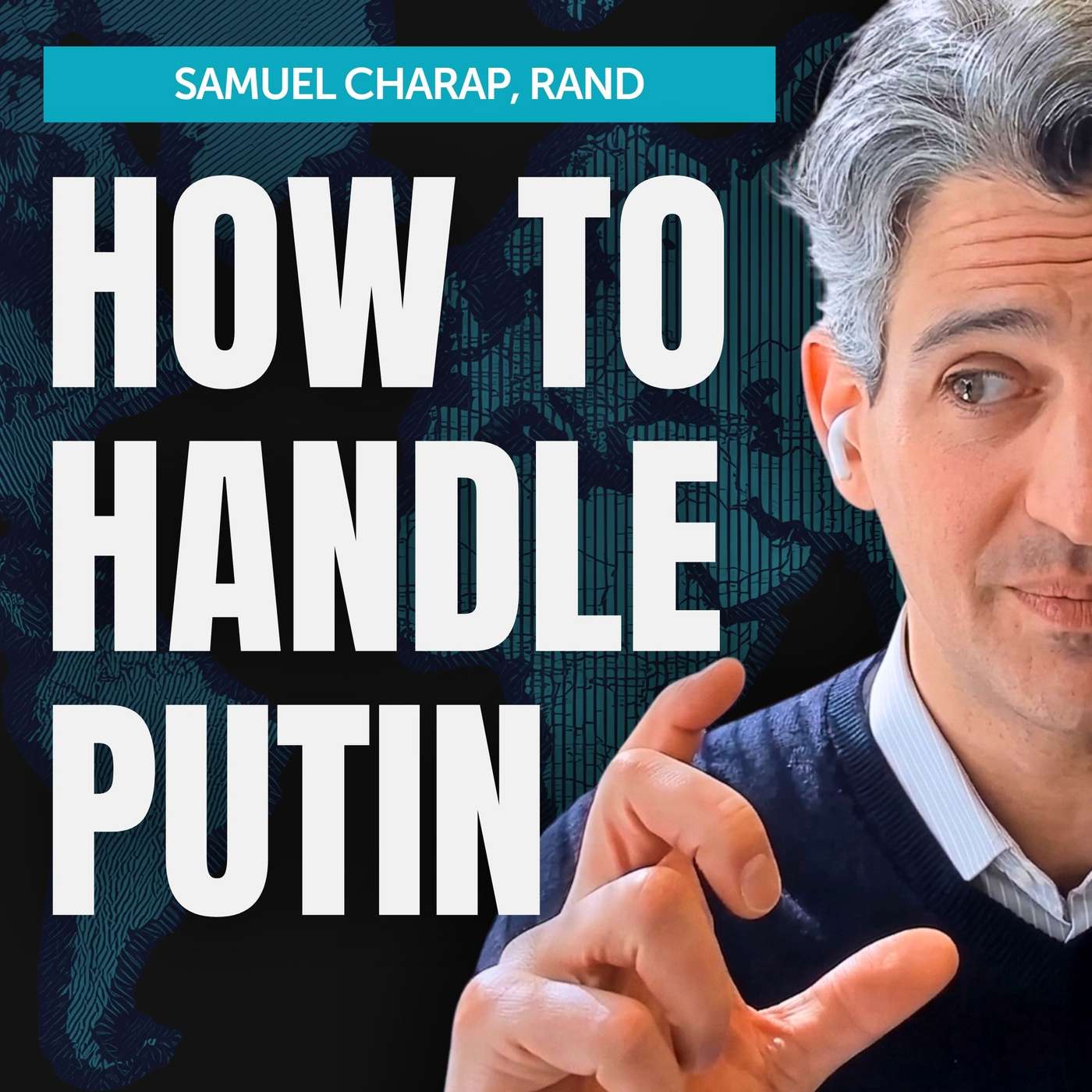
Many people believe a ceasefire in Ukraine will leave Europe safer. But today's guest lays out how a deal could potentially generate insidious new risks — leaving us in a situation that's equally dangerous, just in different ways. That’s the counterintuitive argument from Samuel Charap, Distinguished Chair in Russia and Eurasia Policy at RAND. He’s not worried about a Russian blitzkrieg on Estonia. He forecasts instead a fragile peace that breaks down and drags in European neighbours; instability in Belarus prompting Russian intervention; hybrid sabotage operations that escalate through tit-for-tat responses. Samuel’s case isn’t that peace is bad, but that the Ukraine conflict has remilitarised Europe, made Russia more resentful, and collapsed diplomatic relations between the two. That’s a postwar environment primed for the kind of miscalculation that starts unintended wars. What he prescribes isn’t a full peace treaty; it’s a negotiated settlement that stops the killing and begins a longer negotiation that gives neither side exactly what it wants, but just enough to deter renewed aggression. Both sides stop dying and the flames of war fizzle — hopefully. None of this is clean or satisfying: Russia invaded, committed war crimes, and is being offered a path back to partial normalcy. But Samuel argues that the alternatives — indefinite war or unstructured ceasefire — are much worse for Ukraine, Europe, and global stability. Links to learn more, video, and full transcript: https://80k.info/sc26 This episode was recorded on February 27, 2026. Chapters: Cold open (00:00:00) Could peace in Ukraine lead to Europe’s next war? (00:00:47) Do Russia’s motives for war still matter? (00:11:41) What does a good ceasefire deal look like?